
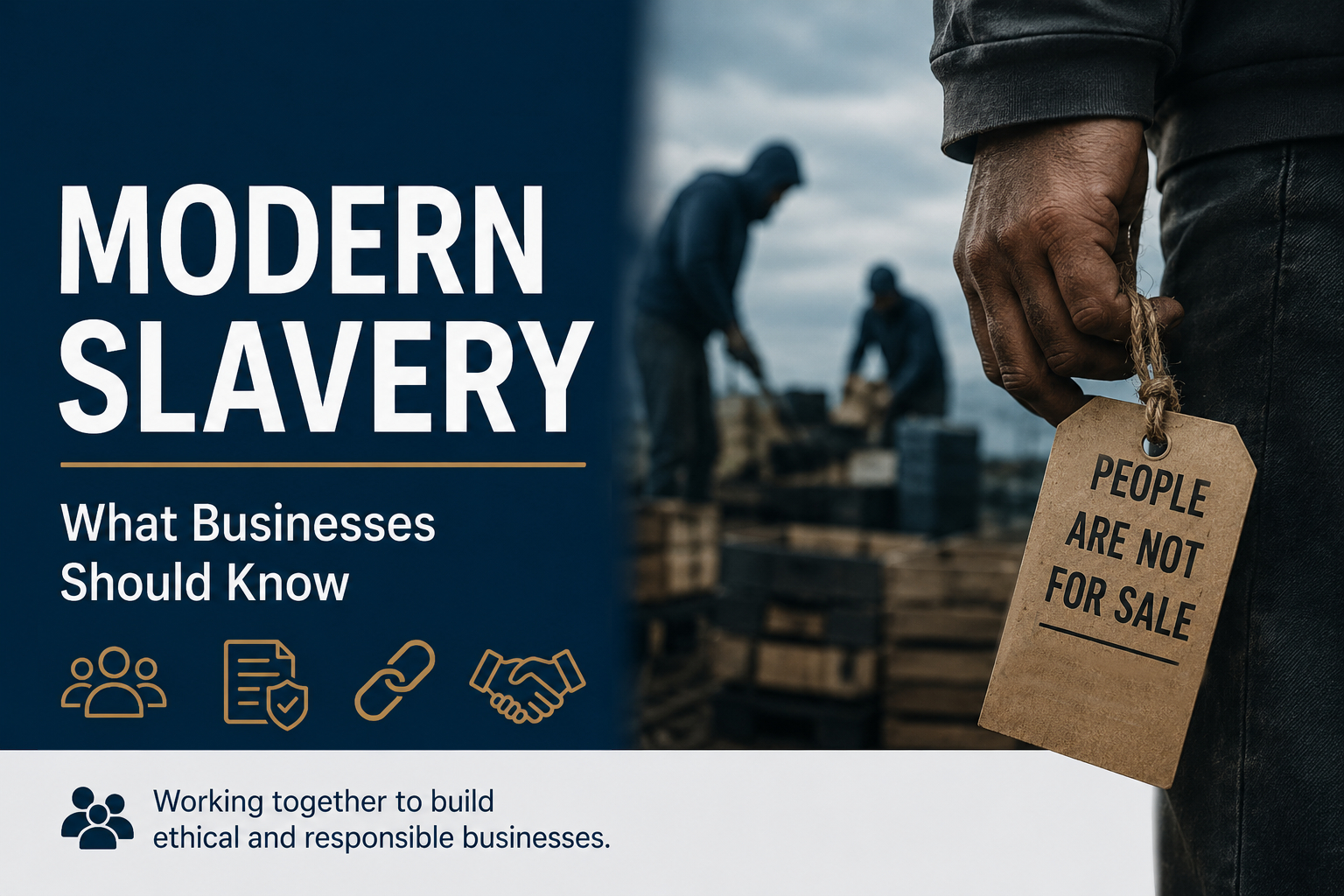
Modern slavery is an umbrella term which encompasses slavery, servitude and forced and compulsory labour, and human trafficking for the purposes of exploitation. Exploitation can manifest in different ways, including sexual exploitation, forced labour, criminal exploitation and domestic servitude. Potential victims of modern slavery in the UK who come to the attention of authorised first responder organisations are referred to the National Referral Mechanism (NRM).
Reality of modern slavery in the UK
Modern slavery isn’t a distant problem – it is happening now, and it can affect businesses of any size. The 2023 Global Slavery Index estimated that on any given day in 2021, there were 122,000 people living in modern slavery in the UK. In 2025, a total of 23,411 potential victims of modern slavery were referred to the Home Office, a 22% increase compared to the preceding year. The number of referrals made in 2025 is the highest any year since the NRM began, overtaking 2024s record.
Under the Modern Slavery Act 2015, you are legally required to publish an annual modern slavery and human trafficking statement that sets out the steps being taken to prevent modern slavery in your business and supply chains. A commercial organisation is legally required to publish an annual statement if it:
- Is a ‘body corporate’ or partnership, wherever incorporated or formed
- Carries on a business, or part of a business, in the UK
- Supplies goods or services, and
- Has an annual turnover of £36 million or more.
This threshold means some small businesses could fall outside the legal requirement – but that doesn’t mean they should ignore the risk. Businesses can unknowingly contribute to modern slavery through their supply chains, which are often difficult to trace. This means that goods or services used may have been produced using forced labour. While smaller businesses don’t have the same level or resources as larger businesses, we can all be contributing unknowingly to the issue and there are a number of steps we can take to combat it.
Education
A good first step to take for smaller businesses is to educate everyone about what modern slavery is, signs of modern slavery to look out for, and how to report it. This education can be carried out through training sessions, workshops, or online resources. The modern slavery training resource page provides a range of resources, including an Anti-Slavery Partnership Toolkit, to help educate everyone in your business about modern slavery. It also provides a modern slavery awareness booklet that sets out some of the key facts about modern slavery.
Risk Assessments
To ensure your supply chain does not have modern slavery present, you could conduct a risk assessment. The UK government’s Modern Slavery risk assessment tool is available for any businesses to use, even if they don’t supply the public sector.
Sprintlaw also offers a useful step-by-step guide in getting started in assessing modern slavery risk in your operations and supply chain. You can find that here.
Developing a statement setting out your business’s commitment to ethical practices and prohibiting the use of forced labour in its supply chains. This can be communicated to suppliers and customers to show that your business takes modern slavery seriously. Businesses can pledge to undertake anti-slavery actions, such as providing training for staff, and set key performance indicators (KPIs) to measure performance against these actions. You can view Cumbria Chamber’s modern slavery and human trafficking statement here and you will be able to find other examples online.
Partnerships
Through sharing information and best practices, collaboration on training programs, and participating in events and networks, businesses can work together with each other to combat modern slavery.
Support
Unseen, UK charity which supports victims of modern slavery, provides a range of specialist unseen provides a range of specialist services for businesses, tailored to your requirements including a list of signs to watch out for. They also run a modern slavery and exploitation helpline which can be used to report instances of exploitation. They work with businesses to build the capability to reduce and eliminate worker exploitation. Through a process of helping businesses understand their legislative requirements, and providing gap analysis and training, Unseen will support businesses to build a strong and sustainable business strategy. Unseen works in partnership with businesses to minimise risks and create a more socially responsible approach to business.
Another useful organisation is stronger together, an impact driven not for profit organisation that provides businesses with practical training, resources, business services and collaborative programmes. They specialise in responsible recruitment, fair work and tackling labour exploitation, providing practical, innovative solutions, based on established international standards and methodologies, to drive effective human rights due diligence in global supply chains.
Through taking practical and proactive steps and using the resources listed in this article, we can help tackle modern slavery and work towards a more ethical and sustainable business environment.